
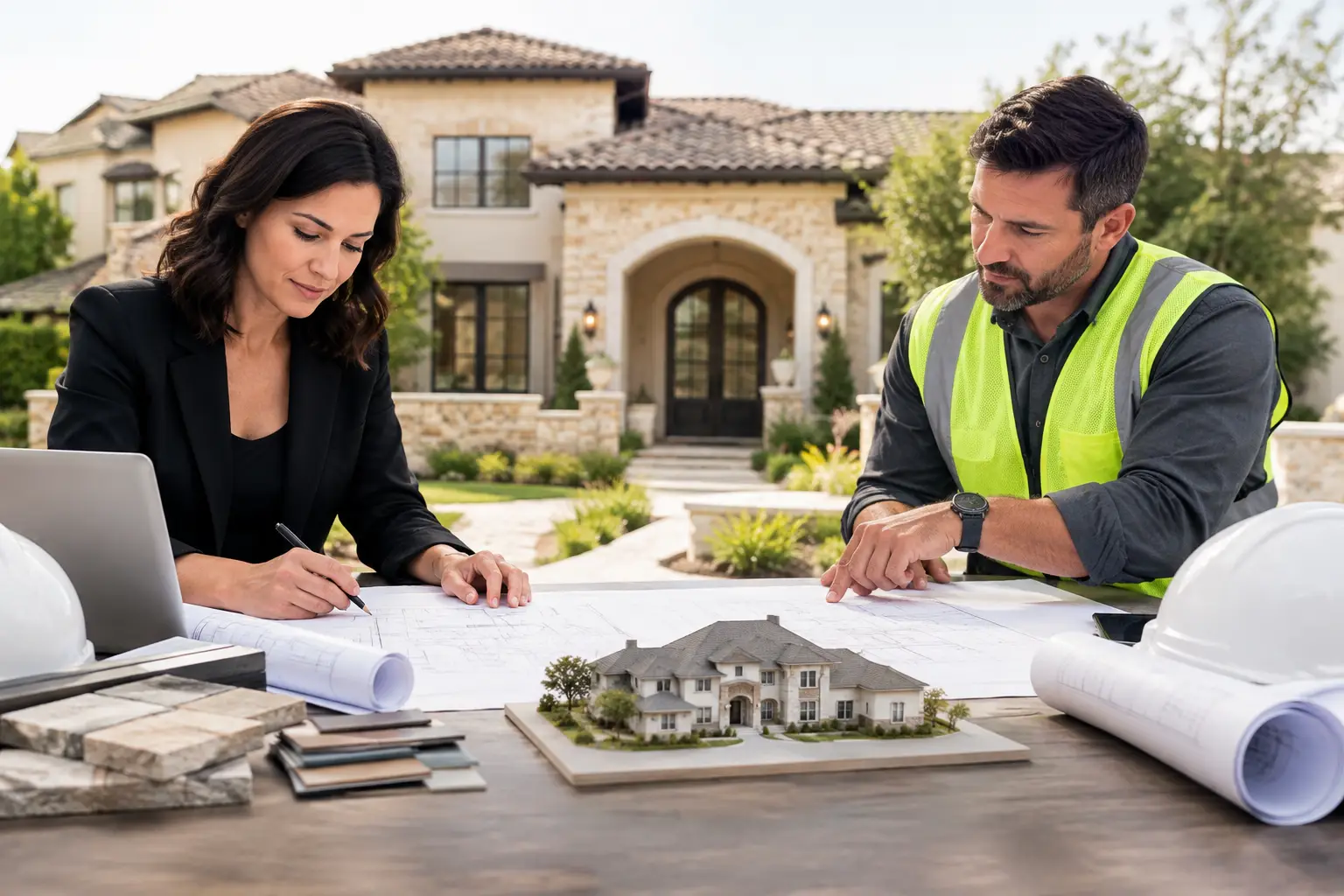
A custom home begins with more than a floor plan. It begins with your property, your budget, and the way you want to live there for years to come. When weighing an architect versus design build firm, the right choice is not about finding one approach that is always better. It is about choosing the process that gives you the right level of design freedom, guidance, and accountability for your particular home.
For Texas landowners, that distinction matters early. A home that looks right on paper may need meaningful adjustments once a team considers drainage, setbacks, views, utility access, trees, soil conditions, and the practical cost of building on your lot. The best path is the one that brings those realities into the conversation before decisions become expensive to change.
Architect Versus Design Build Firm: The Basic Difference
With a traditional architect-led process, you typically hire an architect to develop the home design, coordinate engineering as needed, and produce plans for construction. Once the plans are complete, you seek bids from builders or select a builder to execute the design. Your architect and builder are separate parties, each with a distinct agreement and role.
A design-build firm combines the design and construction sides of the project under one coordinated process. Design, estimating, selections, site planning, and construction are handled by a connected team rather than passed from one independent party to another. The exact arrangement varies by company. Some firms have licensed architects in-house, while others collaborate with architectural professionals when a project calls for their services.
Neither route removes the need for careful planning. Both can produce a beautiful, lasting custom home. The difference is largely in how decisions move from an idea to a buildable, budget-aware plan.
When Working With an Architect May Be the Better Fit
An architect can be an excellent choice for a homeowner pursuing a highly unusual design, a complex historic or urban context, or a home where architectural expression is the primary driver from the start. If you have a strong vision for a one-of-a-kind structure and want a long, design-focused exploration before choosing a contractor, the traditional route can give that process room to develop.
This approach may also suit owners who want to interview several builders after the plans are finished. Competitive bidding can feel appealing because it offers multiple construction prices for the same drawings. In practice, though, bids are only as comparable as the plans and specifications are complete. If allowances, finishes, site work, or engineering details are still unclear, lower bids may leave out costs that return later as change orders.
The architect-led route also asks more of the homeowner. You may be coordinating conversations between the architect, engineer, interior designer, builder, and other professionals. That can work well for a client who enjoys being deeply involved and has time to manage decisions. It can feel less comfortable for someone who wants one clear point of contact from the first property walk through construction.
Why Homeowners Choose a Design-Build Firm
A design-build process puts construction knowledge into the design conversation early. Instead of waiting until the drawings are complete to learn whether a porch roof, window package, foundation condition, or kitchen layout changes the budget, the builder’s estimating and field perspective can inform the decision while it is still flexible.
That early coordination is especially valuable on private property. A land assessment can affect where the house sits, how the driveway approaches it, the cost of extending utilities, the need for drainage planning, and the orientation of outdoor living areas. A team that looks at the house and the property together is better positioned to help you avoid designing in a vacuum.
For many families, the greatest advantage is continuity. The same team that learns why you need a larger pantry, a separate home office, a more functional mudroom, or a porch built for hosting friends remains involved as those priorities become drawings, selections, and finished spaces. Communication does not have to travel through a long chain of separate companies.
At Mill Creek Custom Homes, that personal connection includes direct guidance from Home Designer Mitchell Spiers from the early property conversation through the completed home. The goal is not a sales script or a preset plan. It is straight answers about what fits your land, lifestyle, and investment.
The Budget Question Is More Nuanced Than It Looks
Homeowners sometimes assume an architect is the premium option and design-build is the cost-controlled option. The truth is more complicated. Either route can result in a carefully managed project or an overextended budget, depending on when costs are discussed and how complete the scope is.
With an architect-first process, the design may advance significantly before a builder prices it. If the estimate comes in above expectations, the homeowner may need to reduce square footage, revise structural details, rethink finishes, or redesign portions of the plan. This does not mean the process is wrong. It simply means budget feedback arrives later unless a builder is consulted throughout design.
In a design-build relationship, preliminary budgets are usually part of the conversation from the beginning. That creates opportunities to compare choices in real time. You might decide that a vaulted great room is worth the investment while choosing a more straightforward roofline elsewhere. You may protect the budget for custom cabinetry and durable countertops by making disciplined choices in secondary spaces.
Early estimates are still estimates. Site conditions, owner selections, and changes in material pricing can affect the final number. What matters is whether the team is open about assumptions, allowances, exclusions, and the decisions that move costs up or down. Clear communication is more useful than an unrealistically low starting price.
Design Freedom Does Not Belong to One Model
Some homeowners worry that choosing design-build means settling for a limited selection of plans. That may be true with a production-focused builder, but it is not inherent to the design-build model. A true custom process starts with how you live: the number of bedrooms is only one part of the discussion.
Think about the details that shape an ordinary day. Do you need a kitchen that can handle family gatherings without turning the cook into the host’s traffic controller? Would a private primary suite, a quiet study, a hobby room, or a pool bath change how well the home works? Does your land call for a broad back porch facing the sunset, or should the home turn toward a wooded view and away from afternoon heat?
An architect can guide these questions with deep design expertise. A thoughtful design-build team can do the same while connecting each choice to construction methods, materials, and the site. The best option is the one that listens carefully and can explain why a recommendation serves your goals.
Questions to Ask Before You Choose
Rather than choosing based on a label alone, ask each prospective partner how the process works on your type of property. You deserve clear answers before committing to a major investment.
Ask who will assess the land and when. Ask how the team develops and updates the budget as the plan evolves. Ask who is responsible for architectural, engineering, and permitting requirements, and confirm the credentials involved for the scope of your project. Ask whether your selections are made with real allowances and specifications rather than broad assumptions.
You should also ask who will be your day-to-day contact after the contract is signed. A beautiful presentation is not enough if you are unsure who will answer questions during framing, review a selection issue, or explain a schedule change. Custom homebuilding is personal. The working relationship should feel personal, too.
Finally, ask about warranty coverage, construction standards, and how the company handles changes. A 10-year structural warranty can provide valuable reassurance, but homeowners should understand what is covered and how the process works should a concern arise.
Choose the Process That Helps You Make Better Decisions
If your priority is a long, independent architectural exploration with the option to bid completed plans among builders, an architect-led path may suit you well. If you want a coordinated team to connect your home design, property conditions, selections, and construction budget from the beginning, design-build may offer a more direct experience.
The right partner should not rush you toward either answer. They should walk the property, ask how you want to live, talk honestly about the budget, and help you see what is possible before a line is drawn. That is how your vision becomes a home that feels right not only on move-in day, but every day after.