
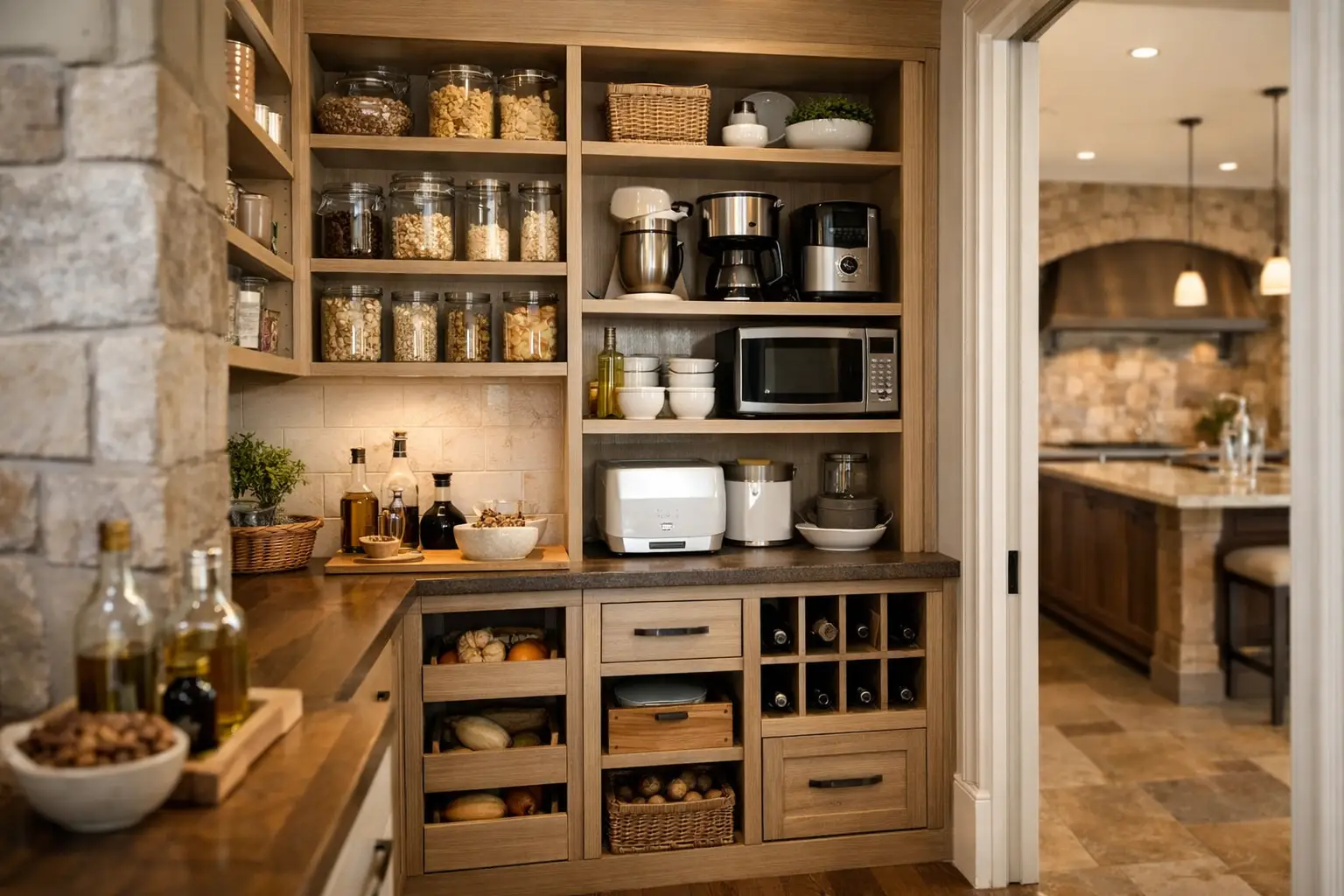
A beautiful kitchen can still feel frustrating when the pantry cannot keep up with the people using it. A thoughtful custom kitchen pantry design gives every grocery run, school morning, holiday meal, and casual gathering a place to land. Rather than accepting a standard closet with a few fixed shelves, you can plan storage around the way your household actually lives.
For a custom home, the pantry is not an afterthought tucked beside the refrigerator. It is part of the kitchen’s working rhythm. The right layout protects counter space, shortens the distance between ingredients and appliances, and makes it easier to see what you have before another trip to the store.
Start With the Life Your Pantry Will Support
The best pantry design begins with honest conversations about routines, not cabinet finishes. A family that cooks most evenings and buys groceries in bulk needs something different from a couple who enjoys hosting wine dinners or a homeowner planning a retirement home with an organized, low-maintenance kitchen.
Think about what comes through the door each week. Cases of sparkling water, paper goods, small appliances, pet food, baking supplies, kids’ snacks, serving pieces, and seasonal platters all take up more room than most homeowners expect. If these items do not have a designated home, they end up on kitchen counters, in the garage, or in cabinets meant for everyday dishes.
It also helps to consider who will use the pantry. Young children may need a reachable snack drawer, while a serious home cook may prefer open shelving for oils, spices, and dry ingredients. If entertaining is a regular part of your lifestyle, a pantry can support that role with space for a beverage station, extra glassware, ice buckets, and serving boards.
During the design phase, these details matter as much as the overall square footage. Your home should reflect your vision, your property, and your daily habits. A pantry is one of the clearest examples of where personalized planning pays off long after move-in day.
Choose a Pantry Layout That Fits the Kitchen
A pantry should feel connected to the kitchen without interrupting its traffic flow. The right option depends on the home plan, the amount of available space, and how you want the kitchen to function during busy moments.
Walk-In Pantries Offer Flexible Storage
A walk-in pantry is a natural choice for many larger custom homes because it can hold a wide range of items without making the main kitchen feel crowded. Shelving can wrap two or three walls, with deeper storage for bulk goods and shallower shelving where visibility matters. A narrow walk-in pantry can work well, but it needs careful shelf depth and a clear aisle. Oversized shelves are often less useful than they sound, since cans and bags get lost behind one another.
Walk-in designs also create opportunities for features that do not belong in a standard cabinet pantry. You might include a countertop for unloading groceries, outlets for a toaster or coffee equipment, drawers for linens, or a small appliance zone that keeps the kitchen counters open.
Butler’s Pantries Keep Hosting Prep Out of Sight
A butler’s pantry typically sits between the kitchen and dining area, or near an entertaining space. It is especially useful for homeowners who want the main kitchen to remain calm and presentable while meals are being prepared. It may include a secondary sink, dishwasher, undercounter refrigerator, cabinetry, and a generous serving counter.
This arrangement requires more plumbing, electrical work, cabinetry, and countertop material than a simple walk-in pantry, so it should be considered early in the budget and design process. For frequent hosts, the added function can be worth it. For a household that rarely entertains, those dollars may be better directed toward a larger working pantry or other kitchen upgrades.
Cabinet Pantries Can Be the Right Answer
Not every effective pantry needs its own room. Tall pantry cabinets with roll-out shelves can provide excellent storage in a smaller footprint, particularly when paired with a nearby utility closet or well-planned mudroom storage. They are easy to access and can create a clean, furniture-like look in the kitchen.
The trade-off is capacity. Cabinet pantries generally work best when the household shops more frequently, stores fewer bulk items, or has another place for oversized supplies. A good design does not chase the largest pantry possible. It gives you the right amount of storage without sacrificing a comfortable kitchen, natural light, or useful living space elsewhere.
Plan Storage From the Bottom Shelf Up
Once the pantry footprint is established, the interior should be designed around what will be stored there. Fixed shelving alone may be economical, but a mix of shelves, drawers, and pull-outs usually makes the space easier to use over time.
Place heavier items low. Deep lower drawers are ideal for canned goods, bottled drinks, pet food, and small appliances. Drawers prevent you from crouching down and reaching into a dark back corner, and they make inventory easier at a glance. Adjustable shelves above can accommodate cereal boxes, mixing bowls, snack bins, and serving pieces as your needs change.
A few open shelves at eye level are useful for the items you reach for most. Keep these shelves relatively shallow, usually around 12 inches, so ingredients stay visible. Deeper shelves can be reserved for larger appliances, paper towels, and bulk purchases. A small vertical compartment for baking sheets, cutting boards, and trays can eliminate one of the most common kitchen cabinet frustrations.
If you plan to store a microwave, coffee maker, or other appliance in the pantry, account for ventilation, clearance, and dedicated electrical outlets from the beginning. Appliances create heat and need practical access. A pantry counter can be convenient, but it should not become a hidden dumping ground for every item that lacks a home.
Do Not Overlook Doors, Lighting, and Finishes
The pantry door changes how the kitchen feels. A standard swing door is simple and cost-effective, but it needs room to open without blocking a work zone. A pocket door saves space, while a glass or reeded-glass door can bring character and light to the area. Open pantry entries can look inviting, though they demand more consistent organization.
Lighting deserves the same attention. A single ceiling fixture may leave corners dim, especially in a deep walk-in pantry. Recessed lights, a decorative flush-mount fixture, or lighting integrated into shelving can make the room more practical and welcoming. Good lighting also helps prevent duplicate purchases because labels, expiration dates, and ingredients are easier to see.
Finishes can coordinate with the kitchen without copying every material exactly. Painted cabinetry, warm wood shelving, durable quartz counters, and tile backsplashes can all work well. The priority is choosing materials that fit the level of use. A hard-working pantry does not need to be overly ornate, but it should feel like a considered part of the home rather than a utility closet.
Design for Change, Not Just Move-In Day
A pantry that works beautifully in year one should still support your household years later. Children grow, cooking habits change, and holidays or retirement may bring a new rhythm to the home. Adjustable shelves, flexible drawers, and clearly planned zones allow the room to adapt without a renovation.
It is also wise to leave some breathing room. Filling every shelf during the first grocery trip can make a pantry feel smaller than it is. A little open capacity gives you room for holiday baking, a party, or a warehouse-store purchase when it makes sense.
When planning a custom home on your own property, pantry decisions connect to the broader kitchen layout, home size, and budget. A property walk, lifestyle conversation, and clear design process help reveal whether your home needs a compact cabinet pantry, a generous walk-in space, or an entertaining-focused secondary kitchen. The most satisfying answer is rarely the trendiest one. It is the one that makes an ordinary Tuesday feel easier, and makes welcoming people into your home feel natural.