
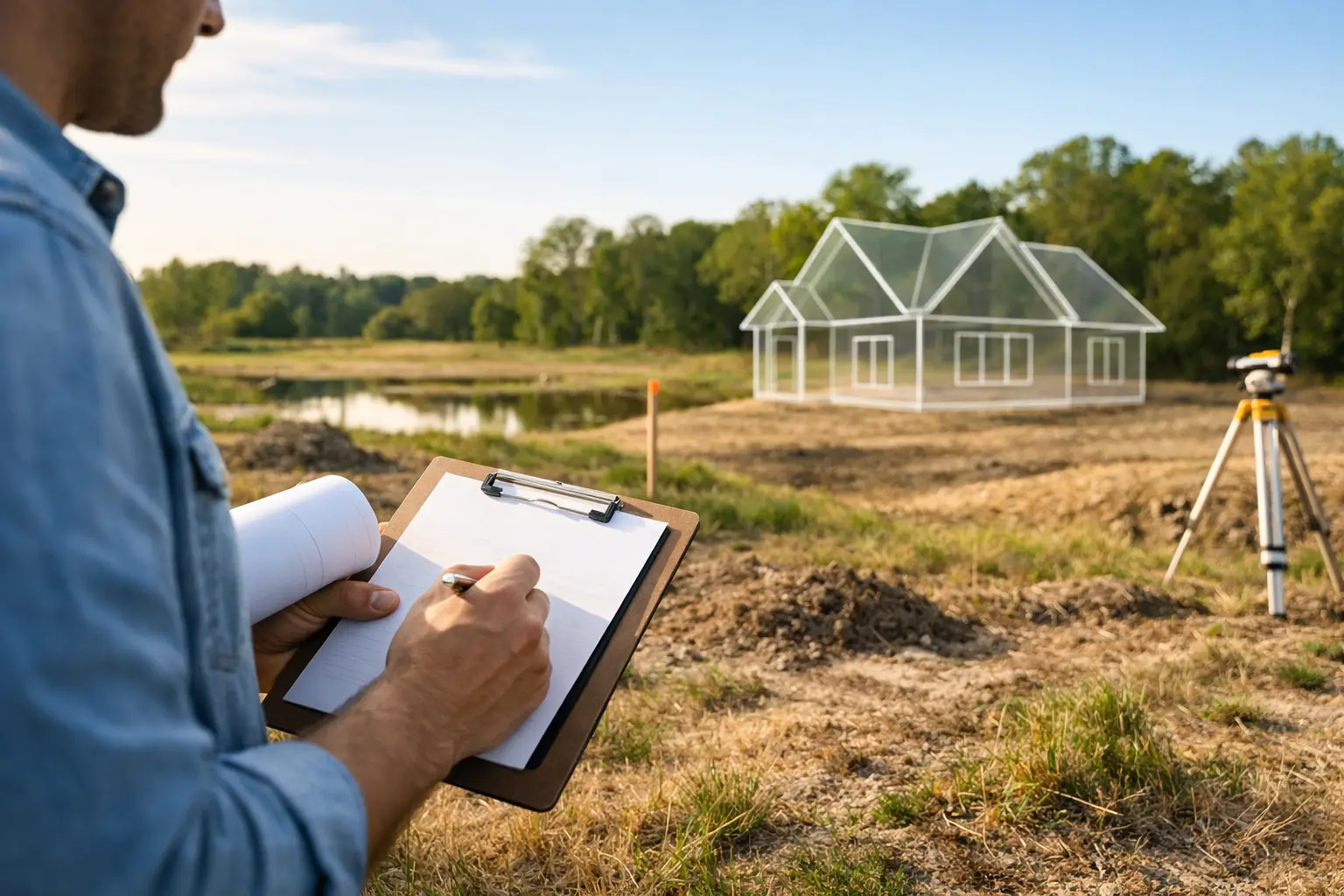
A beautiful piece of Texas property can make you picture the whole life you want there: a long front porch, a kitchen built for family gatherings, room for kids or grandkids to run, and a view worth waking up to. But before plans begin, you need to evaluate land before building a home. What looks like the perfect homesite from the road may carry costs or limits that change the design, budget, or timeline.
That does not mean you should avoid land with trees, slopes, a pond, or a rural setting. It means the property needs to be understood before you make expensive decisions. The right assessment gives your home a better start and helps ensure your vision fits your property, your lifestyle, and your budget.
Start With a Walk of the Property
A property walk is more than a casual tour. It is the first chance to see how the land actually works. Walk it after a rain if possible, and pay attention to where water stands, where the ground changes elevation, and how you would naturally enter and move around the site.
Consider the practical experience of living there. Where will guests arrive? Is the drive long, narrow, steep, or shared? Is there enough room to turn vehicles around? If you want a detached shop, pool, outdoor kitchen, or space for animals, will those features fit without competing with the home itself?
The best building location is not always the most obvious one. A spot with the best view may require significant grading, a long utility run, or a driveway that adds meaningful cost. A slightly different placement may preserve mature trees, improve drainage, create better privacy, and make the house more efficient to build.
Confirm Access, Boundaries, and Easements
Before falling in love with a homesite, confirm that you have legal and practical access to it. A road that appears to serve a property is not necessarily a dedicated public road. Some rural parcels rely on private roads or recorded access easements, and maintenance responsibilities can vary.
A current survey helps identify property lines, existing improvements, fences, encroachments, and easements. Easements are common and are not automatically a problem. However, utility, pipeline, drainage, or access easements may restrict where a home, septic system, fence, driveway, or outbuilding can go.
Do not rely on fence lines alone. Fences can be placed for convenience rather than exactly on a boundary. Knowing the true limits early protects you from designing a home around assumptions that later prove incorrect.
Ask What Can Be Built There
Deed restrictions, neighborhood rules, county requirements, and floodplain conditions all deserve attention before design begins. Restrictions may affect minimum square footage, exterior materials, roof style, livestock, outbuildings, or whether a manufactured structure is allowed nearby. If the property is in an HOA or a restricted subdivision, there may also be architectural review requirements and construction rules.
Rules are not necessarily obstacles. They simply need to be part of the conversation from the beginning. A custom home should feel personal, but it also needs to comply with the requirements tied to the land.
Understand Soil, Drainage, and Elevation
Texas soil conditions can vary dramatically, sometimes within the same property. Clay soils, sandy areas, rock, and expansive ground each affect foundation planning, drainage work, and construction cost. A professional soil evaluation provides information that should guide the structural approach rather than become an afterthought once construction is underway.
Drainage matters just as much. Look for low areas, swales, standing water, erosion, and nearby creeks or ponds. Water should move away from the future home, not toward it. Proper site planning may involve shaping the grade, establishing drainage paths, selecting an appropriate foundation elevation, or locating the home outside the areas that routinely hold water.
Floodplain status should be verified through the appropriate local resources and professionals. Building in or near a floodplain can be possible in some situations, but it often comes with additional engineering, elevation, insurance, and permitting considerations. This is one area where a lower purchase price can quickly lose its appeal if the construction requirements are substantial.
Check Utilities Before You Design Around Them
Utilities are one of the biggest differences between building in an established neighborhood and building on acreage or a rural tract. Ask early about electric service, water availability, sewer service, internet options, natural gas, and waste management.
If public water and sewer are unavailable, a well and septic system may be needed. Those systems require testing, approvals, and adequate space. The location of a septic field can influence where the home, pool, driveway, and future additions can be placed. A well location also needs to work with required setbacks and the overall site plan.
Electric service may be nearby, but “nearby” can still mean a costly extension. The same is true for high-speed internet, an increasingly important consideration for professionals working from home, families with connected devices, and households relying on streaming services. Get clear answers about availability, connection fees, and the distance from service points to the planned house location.
Build a Site Budget, Not Just a House Budget
The home itself is only part of the investment. When you evaluate land before building a home, include the cost of making that land ready for construction. Depending on the property, this may include clearing, demolition, grading, driveway construction, culverts, utility extensions, well and septic work, retaining walls, permits, surveys, engineering, and drainage improvements.
A wooded property may offer privacy and character, but selective clearing takes planning. Removing too many trees can change drainage, eliminate shade, and leave a new home feeling exposed. On the other hand, preserving every tree near the proposed footprint can create construction complications and future maintenance concerns. The goal is not to clear the site aggressively or preserve it at all costs. The goal is to make thoughtful choices that protect the property while allowing the home to function well.
This is also where realistic planning matters most. A lower-priced lot with major site work may cost more overall than a higher-priced property with utilities, access, and a suitable building pad already in place. Looking at the full picture helps you compare properties fairly.
Place the Home Around Your Daily Life
The land should shape the home, and the home should support the way you intend to live. Think about sun exposure, prevailing winds, views, privacy, and the relationship between indoor and outdoor spaces. In Texas, the direction a porch faces can influence how often you enjoy it during the hottest months of the year.
A west-facing wall with large expanses of glass may create heat gain and glare. A well-positioned covered patio can offer more usable outdoor time. Bedrooms may benefit from quieter portions of the property, while a kitchen, family room, and outdoor living area may be best oriented toward the view or gathering space.
Lifestyle details deserve a place in the site plan too. If you come home from work in boots, carry groceries in from a long drive, host large family holidays, or want a dedicated space for hobbies, those routines affect entry locations, garage placement, mudroom design, and circulation. A custom home works best when those choices are made together rather than separately.
Bring the Right People In Early
Land evaluation is a team effort. Depending on the property, you may need a surveyor, geotechnical professional, septic designer, well contractor, engineer, utility provider, or local authority to provide clear answers. Waiting until the final plans are complete can lead to frustrating redesigns.
At Mill Creek Custom Homes, the process starts with practical conversation and property-specific guidance, not a generic sales script. Mitchell Spiers can help homeowners look beyond the view and discuss how a property may affect home placement, budget, materials, and the details that matter to daily life. The earlier those conversations happen, the more freedom you have to make confident choices.
A piece of land does not have to be perfect to become the right place for your home. It needs to be understood. With clear information and a thoughtful plan, the character of your property can become one of the best parts of the home you build there.