
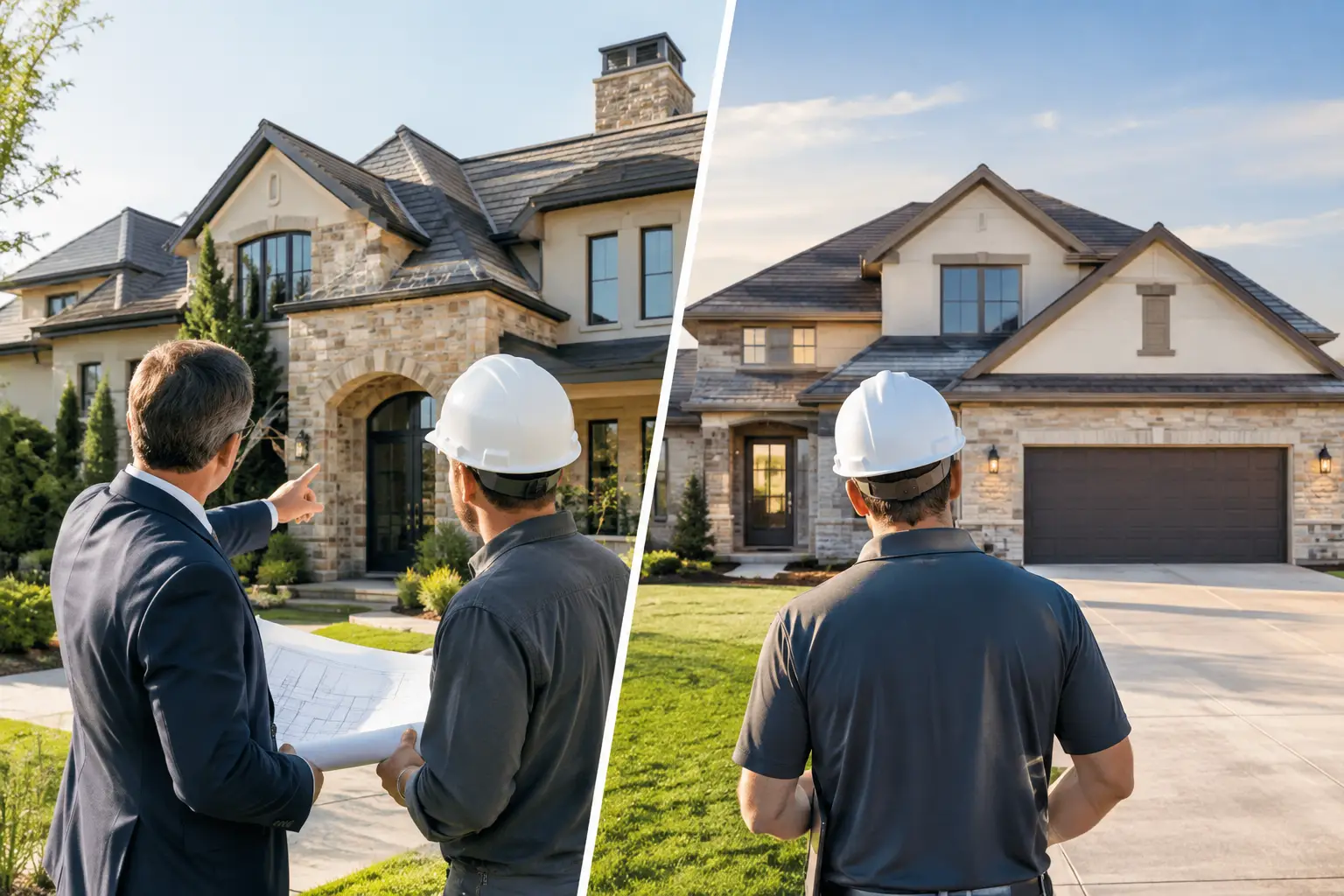
A custom builder versus production builder decision is not simply about the look of the finished house. It shapes where your home can be built, how much influence you have over the design, what happens when the property presents a surprise, and who helps you make decisions along the way. For families planning a permanent home on their own Texas property, those differences matter long after move-in day.
A production home can be a sensible choice for buyers who want a defined neighborhood, a familiar floor plan, and a more limited set of selections. A custom home is built around a different starting point: your vision, your property, and your lifestyle. Neither path is automatically right for every household. The better choice depends on what you value most and how closely your future home needs to fit the life you actually live.
Custom Builder Versus Production Builder: The Core Difference
A production builder generally builds many homes from a prepared collection of plans, often within a planned community. The builder has repeated systems for pricing, construction, purchasing, and scheduling because the homes share similar layouts, materials, and site conditions. Buyers typically choose a plan, select from approved options, and build within the community’s available lots and requirements.
A custom builder begins with fewer assumptions. The process can start with a walk of your land, a conversation about the way your family lives, and an honest discussion of budget. Instead of asking which available plan you prefer, the conversation asks where the home should sit, how the rooms should work together, what views deserve framing, and which details will make daily life easier.
That difference changes the entire experience. Production building is designed for repeatability. Custom building is designed for personalization and problem-solving.
Your Land Is Often the Deciding Factor
If you already own property, or plan to buy acreage, a custom approach is usually the more natural fit. Land in the Brazos River Basin and surrounding counties can bring meaningful variables: drainage patterns, utility access, soil conditions, tree placement, easements, road approach, setbacks, and the best orientation for sun, shade, and views.
Those are not details to sort out after a plan is chosen. They should help shape the plan itself. A long driveway may affect the placement of the garage. A favorite grove of trees may suggest the best porch location. A sloped site may influence foundation planning and the way the home meets the landscape. Even the location of a well or septic system can affect the usable building area.
Production homes are generally built on builder-controlled lots that have already been planned for a specific community. That can remove some uncertainty, but it also limits your flexibility. If your goal is to build on family land, create privacy from the road, preserve an open pasture view, or place a workshop near the home, a standardized lot-and-plan model may not serve the property well.
A property walk should happen early
A good custom process treats the property as part of the design team. Before getting too far into elevations and finish selections, it helps to assess access, building envelopes, utilities, topography, and site preparation needs. This early work provides clearer expectations and helps prevent a beautiful plan from becoming an expensive mismatch for the land.
Design Freedom Means More Than Picking Finishes
Many production builders offer design packages, upgraded countertops, flooring choices, and a range of exterior colors. Those choices can produce an attractive home. But they are different from designing the home around your routines.
With a custom home, the floor plan can respond to the way you cook, host, work, rest, and move through the day. A family that entertains may want the kitchen, living area, and outdoor porch to connect without bottlenecks. Someone who works from home may need a true office away from the main living spaces, not a spare bedroom with a desk. Retirees may prioritize a zero-threshold shower, wider circulation areas, and a single-level layout that remains comfortable over time.
The same applies to storage and utility spaces. A mudroom can be sized for sports equipment, ranch boots, backpacks, or pets. A pantry can be designed for the way you shop. The laundry room can be positioned where it reduces daily back-and-forth. Cabinetry, lighting, ceiling treatments, windows, porches, and baths can be coordinated as one home rather than added as disconnected upgrades.
That freedom also carries responsibility. More choices require more conversations and decisions. The right custom builder helps organize those choices in a logical order, provides practical guidance, and keeps the design connected to the budget. Personal service should make the process feel more manageable, not more complicated.
Budget: Compare the Whole Picture, Not Just the Starting Price
A production home often appears easier to price at first because the base model is already defined. That can be helpful, particularly for buyers who want a narrower selection process. The important question is what is included in that number and what changes once options, lot premiums, landscaping, upgrades, and other requirements are added.
Custom homes require a more detailed budget discussion because each home, site, and specification package is different. Site work, utility connections, foundation needs, driveway length, and land improvements can be major considerations on private property. The finishes you choose also matter, from windows and cabinetry to appliances, flooring, and outdoor living features.
A custom build is not automatically more expensive in every category, and a production home is not automatically less expensive once upgrades are considered. The more useful comparison is value. Are you paying for rooms you will use? Are the materials aligned with your expectations? Does the plan fit the land without costly compromises? Will the home still serve your family as needs change?
Clear planning does not eliminate every unknown in construction, especially on raw land. It does give you a better framework for making choices before they become costly changes. Straight answers early are more valuable than an unrealistically low number that creates disappointment later.
The Relationship During Construction Matters
Building a home involves hundreds of decisions, even when much of the work happens behind the scenes. Communication can determine whether the process feels organized or overwhelming.
In a production setting, buyers may interact with separate sales, design, construction, and warranty contacts. This structure can work well in a high-volume environment, but the experience may feel less personal. Your salesperson may not be the person who understands the construction details, and the person managing the build may not have been part of the earliest conversations about your priorities.
With a custom builder, continuity is a meaningful advantage. Having a named local guide involved from the first property walk through construction creates accountability and context. Questions about site placement, selections, or a design choice do not have to be repeated to a new person at every stage.
For homeowners building a high-value residence, this relationship is not a luxury. It is part of risk management. You want a builder who can explain what is happening, why a decision is needed, and how it affects the home you are creating. You also want the confidence that comes from a defined contract, realistic expectations, quality construction practices, and structural warranty protection.
When a Production Builder May Be the Better Fit
Production building deserves consideration when you want to move into a particular community, prefer a proven floor plan, and are comfortable making choices within a preset range. It can also be appealing when a quicker timeline matters more than extensive personalization, or when you do not own land and do not want to manage the added variables of a private site.
There is value in a simpler decision process. If the available plan already meets your needs and the community location is right, a production home may offer a straightforward route to ownership.
The key is being honest about the compromises. If you find yourself trying to force the plan to fit your routines, wishing the home sat differently on the lot, or repeatedly asking whether a major layout change is possible, you may be looking for a custom process instead.
Choose the Process That Respects Your Priorities
The decision comes down to control, context, and connection. A production builder provides a structured path built around repetition. A custom builder provides a collaborative path built around your land and your life.
For someone building on private property, the ability to begin with a site assessment and a practical conversation can protect both the budget and the vision. Mill Creek Custom Homes approaches that work personally, with direct guidance from the first conversation through key handoff.
Your home should not require you to explain away its biggest compromises. Start with the property, the people who will live there, and the moments you want the home to hold. The right building path will become much clearer from there.