
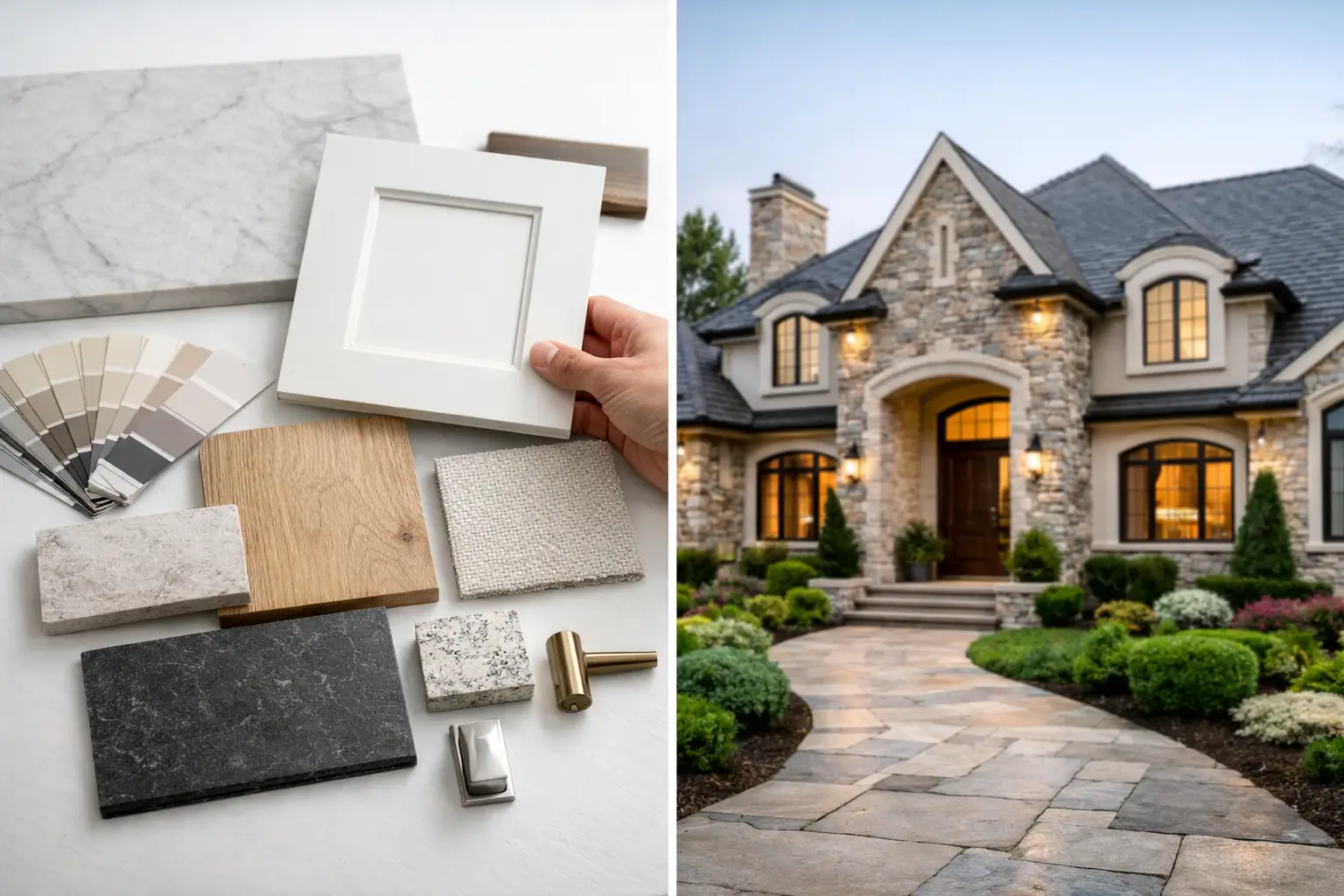
A beautiful finish can still be the wrong choice if it fights the way your family lives. The white oak floor that looks perfect in a photo may show every muddy paw print. A dramatic tile may feel dated sooner than expected. A bargain fixture can become frustrating the first time it leaks. Knowing how to choose home finishes is less about chasing a single look and more about making thoughtful decisions that serve your vision, your property, and your daily routine.
For a custom home, finishes are where the house begins to feel like yours. They shape the rooms you use most, influence maintenance for years, and account for a meaningful part of the overall budget. The goal is not to make every surface match. It is to create a home that feels connected, comfortable, and well considered from the front door to the back porch.
Start With the Way You Want to Live
Before looking at paint chips or cabinet samples, picture an ordinary Tuesday in your future home. Where do backpacks land? Do friends gather around the kitchen island? Are you carrying groceries in from the garage, coming in from a day outside, or managing wet towels after kids use the pool? These details should lead the finish conversation.
A family with young children may prefer durable quartz counters, washable wall paint, forgiving floor tones, and large-format tile with fewer grout lines. A couple building for retirement may place more value on accessible showers, quiet flooring, comfortable lighting, and cabinetry that makes everyday storage easy. Someone who loves to host may invest more in kitchen finishes, an outdoor kitchen, or a porch ceiling that gives the entertaining area a finished feel.
There is no universally right selection. A polished marble backsplash, for example, can be stunning in the right home, but it asks for more care than many ceramic or porcelain options. Honest choices begin with honest expectations about maintenance.
How to Choose Home Finishes in the Right Order
The easiest way to feel overwhelmed is to select finishes room by room without a larger plan. A better approach is to make the decisions that affect the most space first, then work toward the smaller details.
Begin with the architectural direction of the home. Is your vision warm and traditional, clean-lined and contemporary, Texas Hill Country inspired, or a blend that feels collected over time? You do not need a rigid label, but you do need a shared visual direction. That direction informs roof color, exterior masonry, window finishes, flooring, cabinetry, and lighting.
From there, choose the foundational finishes: exterior materials, interior flooring, cabinetry, and countertops. These are high-visibility decisions that establish the home’s color temperature and level of contrast. Once they are settled, tile, paint, hardware, plumbing fixtures, lighting, and decorative details become much easier to narrow down.
This order also protects your budget. It is far more difficult to reduce costs late in the process if major selections have already been made around a countertop or flooring choice that stretches the allowance.
Build a simple finish palette
A finish palette does not have to mean that every room uses the same color. It means the selections relate to one another. Gather physical samples of your primary flooring, cabinet finish, countertop, wall color, metal finish, and tile. Place them together in natural light.
Pay close attention to undertones. Two materials can both appear white but one may lean creamy while the other reads cool gray. Wood finishes can pull yellow, red, or taupe. Black fixtures can look crisp against a cool palette and softer against warm stone or aged brass. Samples reveal these differences much better than a screen.
Choose one or two dominant materials and let the others support them. If the kitchen countertop has pronounced movement, a quieter backsplash often keeps the room balanced. If the tile is the statement, simpler cabinetry and lighting may give it room to stand out.
Spend Where Touch and Use Matter Most
Every custom home has budget decisions. The answer is not to spend the most in every category. It is to put your investment where quality changes daily experience, long-term durability, or the finished character of the home.
Flooring, cabinetry, countertops, exterior materials, windows, and plumbing fixtures typically deserve careful consideration because they are difficult or costly to replace after construction. Cabinet construction and layout matter as much as the door style. A well-designed pantry, a practical mudroom, and drawers where you actually need them can bring more daily value than a trend-driven upgrade.
Some selections offer more flexibility. Decorative light fixtures, cabinet hardware, mirrors, and certain accent walls can often be changed later with less disruption. That makes them useful places to express personality without placing too much pressure on the initial budget.
A good rule is to avoid cutting costs on items hidden behind walls or built into the home’s most-used spaces just to make room for a finish that is mainly decorative. The right choices make the home work well first and look beautiful while doing it.
Let the Property Influence Your Selections
A home on private land has considerations that a neighborhood lot may not. Sun exposure, tree cover, dirt roads, pets, outdoor activity, and the distance between the garage and entry can all affect which finishes make sense.
In the Brazos River Basin and across much of Texas, strong sunlight is a major factor. Large windows and open living areas are wonderful, but direct afternoon light can change how paint, flooring, and countertops read throughout the day. Look at samples near the actual window locations whenever possible. A color that feels calm in a showroom may appear much brighter at home.
Outdoor finishes need the same practical attention. Porch decking, exterior paint, ceiling materials, masonry, and door finishes should be chosen for their ability to handle heat, rain, pollen, and regular use. If your property includes acreage, livestock, a workshop, or frequent outdoor entertaining, durable flooring and a hardworking transition area can be especially valuable.
This is one reason a property walk matters early. The home’s placement and orientation do more than determine the view. They influence light, entry patterns, outdoor living, and the finishes that will feel right once the home is built.
Aim for Timeless Structure, Personal Details
Many homeowners worry about selecting something that will go out of style. Trends are not automatically a problem. The trouble comes when a trend is used everywhere, especially in materials that are expensive to replace.
Keep permanent, large-scale finishes grounded in materials and colors you genuinely enjoy. Natural wood tones, thoughtfully chosen stone, balanced tile, and classic cabinet proportions tend to have lasting appeal because they work across different decorative styles. Then add personality through paint, lighting, hardware, wallpaper, tile accents, and furnishings.
That does not mean your home should feel safe or generic. A custom home should reflect the people who live there. If you love a bold powder bath, a deep green island, or a patterned laundry-room tile, those details can make the home memorable. The key is to use them intentionally, with enough quiet space around them.
Ask Questions Before You Approve a Selection
A sample can look convincing, but it cannot answer every practical question. Before making a final decision, ask how the material performs, what maintenance it requires, whether it is available on schedule, and what installation details affect the final cost.
For tile, ask about slip resistance, grout care, and edge profiles. For countertops, ask about heat, staining, seams, and sealing. For wood flooring, ask about denting, refinishing, and how it responds to changes in humidity. For paint, ask about sheen as well as color. Flat paint may hide wall imperfections, while satin or semi-gloss may be easier to clean in high-use areas.
Also ask to see larger samples whenever possible. A small square of stone or flooring cannot show the full variation of the material. Natural products vary by nature, and even manufactured products can look different across a full installation.
At Mill Creek Custom Homes, selection decisions are part of the larger design-and-build conversation, not a stack of rushed choices handed over after the plan is complete. Clear guidance helps homeowners understand what each decision means for cost, performance, and the overall look of the home.
Give Yourself Permission to Edit
A well-finished home rarely comes from adding more. It comes from choosing the right elements and allowing them to work together. If a room has competing cabinet colors, busy counters, bold tile, dramatic lighting, and several metal finishes, removing one or two ideas often creates a stronger result.
When you are unsure, return to the priorities you identified at the beginning: how you live, what you value, and what you want to feel when you come home. The best finishes are not the ones that impress everyone for five minutes. They are the ones that make your home easier to enjoy year after year.
Choose with care, ask for straight answers, and trust the decisions that fit your life as much as they fit the plan. That is how a collection of materials becomes a home that feels distinctly yours.