
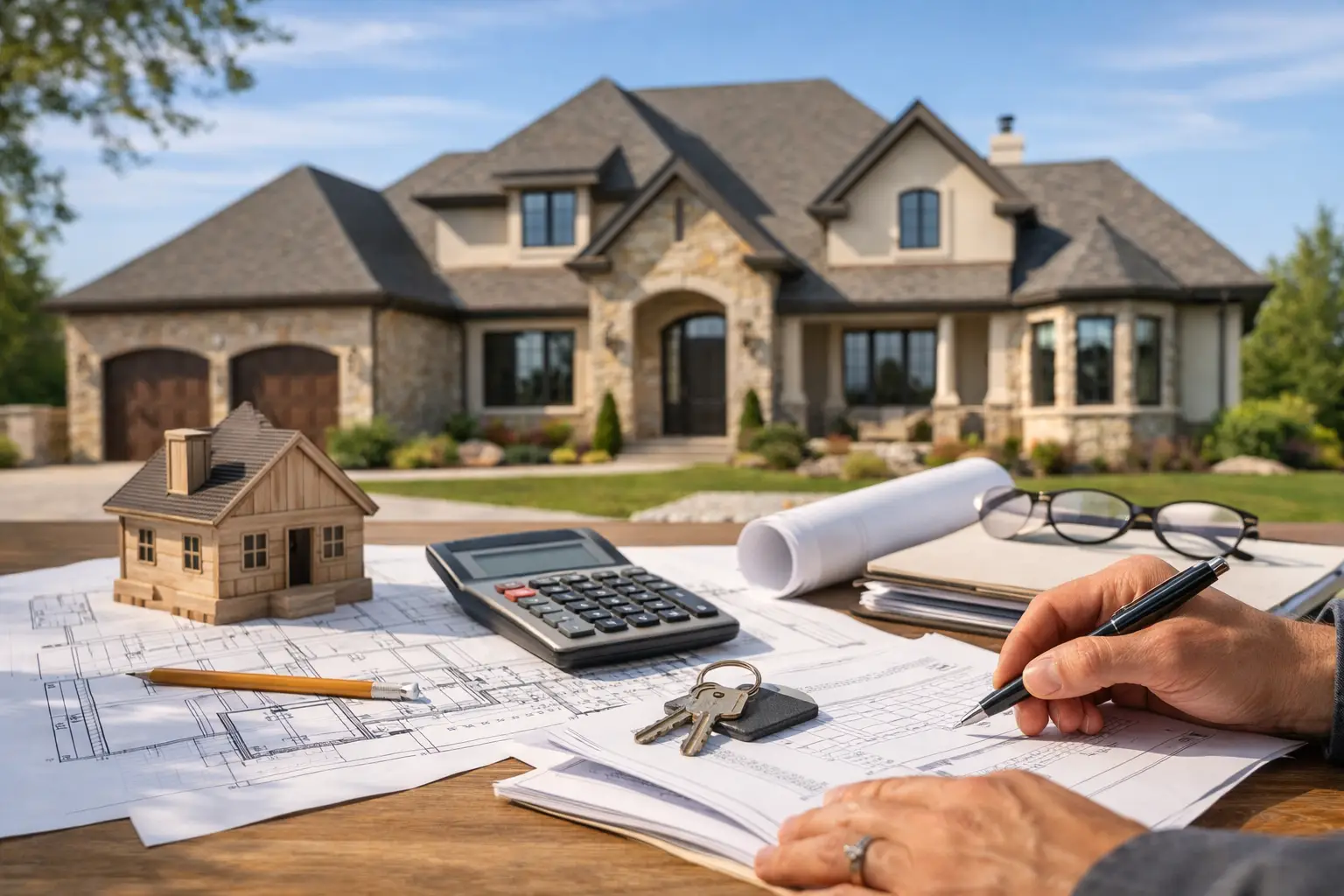
A beautiful plan is only one part of building on your own property. Before finishes, floor plans, or porch views become decisions, custom home financing determines what can be built, when construction can start, and how confidently you can make selections along the way. The best time to discuss financing is early – ideally before finalizing a plan or committing to a price range that does not account for the realities of your land.
For many Texas property owners, a custom home is the largest project they will ever undertake. It deserves more than a quick online payment estimate. A thoughtful financing conversation connects your property, budget, home design, site work, and long-term goals into one workable plan.
Why Custom Home Financing Works Differently
Buying an existing home typically involves one purchase price, one appraisal, and a conventional mortgage at closing. A custom build has more moving parts. The lender is evaluating not only your financial profile, but also the land, the proposed home, the construction agreement, the builder’s qualifications, the plans and specifications, and the anticipated finished value.
Construction lending is usually designed to release money in stages as work is completed. Those stages, often called draws, help fund progress from site preparation and foundation work through framing, mechanical systems, finishes, and final completion. The details vary by lender, but the point is consistent: financing must support the actual sequence of building a home.
That is why a preliminary budget matters so much. It gives the lender and your building team a clear picture of the scope. A plan with a large covered outdoor kitchen, extensive custom cabinetry, premium windows, a detached shop, or a long driveway may be exactly right for your lifestyle. Each feature simply needs to be reflected in the financial plan from the beginning.
Start With the Property, Not Just the House
Your land is a major part of the financing conversation. If you already own it, its equity may contribute toward the equity or down payment required for a construction loan. If you are still looking, the land purchase and the home build may need to be financed together, depending on the lender and the timing of your project.
A property walk can reveal costs that are easy to overlook when you are focused on the home itself. The location of utilities, access from the road, tree clearing, drainage, soil conditions, septic needs, floodplain considerations, and the distance to a build site can all affect the budget. A scenic homesite farther back on the property may be worth it, but it can require more driveway, utility extension, and site preparation.
In the Brazos River Basin and surrounding counties, site conditions can change significantly from one tract to the next. Straight answers about the property early on can protect the home budget later. This is one reason Mill Creek Custom Homes begins with practical property discussions rather than treating the lot as an afterthought.
Land Equity Can Be Helpful, but It Is Not Automatic
Owning land free and clear can be a meaningful advantage. In some cases, a lender may recognize appraised land equity as part of your required contribution to the project. However, the amount depends on the lender’s loan-to-value guidelines, the land appraisal, existing liens, and the overall cost of construction.
Do not assume the price you paid for the land years ago will be the number used in underwriting. Likewise, do not make design decisions based on estimated equity until a lender has reviewed the property and explained its requirements. A direct conversation with a qualified construction lender is more useful than a broad rule of thumb.
Build a Budget That Includes the Whole Project
The contract price for the home is central to custom home financing, but it is not always the full project cost. A realistic budget accounts for the work required to turn raw or lightly improved land into a finished home ready for daily life.
Common items that may need separate attention include land acquisition, surveys, engineering, permits, utility connections, well or septic systems, clearing, grading, driveway work, landscaping, fencing, and owner-selected improvements outside the construction agreement. Some costs can be included in the loan, while others may be paid separately. It depends on the lender, the builder’s contract structure, and the nature of the expense.
You should also keep a reserve for choices and conditions that emerge during the project. This is not a sign that the process is uncertain. It is sensible planning. Perhaps a family decides the kitchen deserves upgraded appliances after seeing the design come together. Perhaps the site requires additional preparation after a detailed evaluation. A contingency gives you room to make sound decisions without putting unnecessary pressure on the build.
Allowances Need Clear Boundaries
Allowances are budgeted amounts for selections that may not be finalized when the contract is signed. They are common for items such as lighting, plumbing fixtures, tile, or certain finish materials. Allowances can be useful, but they should be specific enough to support the level of home you expect to build.
If your vision includes statement lighting, natural stone, handmade tile, or higher-end appliances, tell your designer early. A low allowance can make a starting price look attractive, then create hard choices later. The goal is not to eliminate every decision. It is to make decisions with open eyes and a budget that matches your priorities.
Choose the Loan Structure That Fits Your Timeline
Many homeowners use either a construction-to-permanent loan or a separate construction loan followed by a permanent mortgage. With a construction-to-permanent structure, the construction financing typically converts into a long-term mortgage after the home is complete, subject to the lender’s terms. A two-step approach involves a construction loan first and a separate mortgage closing later.
Neither option is universally better. A one-time closing may feel simpler and can provide more certainty around the permanent loan structure. Separate financing may offer flexibility if long-term mortgage conditions change before the home is finished. Your decision should account for lender costs, rate options, qualification requirements, expected build timeline, and your comfort with the process.
Construction loans may also require interest-only payments during the build, based on the amount drawn at that point, before the permanent mortgage begins. Ask the lender to show you how payments could change at each stage. Understanding the monthly commitment during construction is just as important as understanding the final mortgage payment.
Prepare Before You Apply
A lender will generally want to see documentation that supports both your ability to repay the loan and the viability of the project. Being organized early can prevent avoidable delays once you are ready to move forward.
Have current income documentation, tax returns if applicable, asset statements, information about existing debts, and details on the land available for discussion. When the home is ready to be submitted for financing, the lender may also request plans, specifications, a construction contract, builder information, a construction schedule, and an appraisal package.
For self-employed business owners, early preparation is especially valuable. Income documentation can be more involved than a standard W-2 application, and changes to business debt or large purchases can affect qualification. Before moving money, opening new credit, or buying major equipment during the loan process, ask your lender how it could affect underwriting.
Let Design and Financing Inform Each Other
Financing should not force every custom choice into a spreadsheet. Your home should still reflect your routines, your property, and the way you want to live. But the design process works best when budget guidance is present from the start.
A family that hosts holidays may choose to prioritize a larger kitchen, walk-in pantry, and covered back porch over a formal dining room. A retiree may place more value on a single-level layout, wider passages, and durable finishes than on additional square footage. A landowner with equipment or hobbies may need a practical mudroom, storage, or a separate building plan. These are lifestyle decisions, and each one has a cost relationship.
Clear communication between homeowner, builder, and lender keeps those relationships visible. You do not need to know every selection on day one. You do need a realistic path from the first concept to the final appraisal, without relying on wishful numbers or last-minute compromises.
Questions Worth Asking Your Lender
Before selecting a financing partner, ask how draws are handled, what documentation is required before the first draw, and whether inspections are completed at each stage. Ask which site costs can be included, how land equity is treated, what happens if an allowance changes, and whether there are limits on builder or project types.
Also ask about the expected approval timeline, rate-lock options, closing costs, conversion terms, and what could trigger a re-underwriting review. A good lender should explain these answers in plain language. No pressure, no scripts – just a clear understanding of what the loan requires and what you can expect.
The right financing plan does more than get a project approved. It gives you a steadier way to make decisions, protect your priorities, and move from a piece of land to a home that feels considered from the ground up. Start the conversation early, bring the real details of your property to the table, and give your vision the financial footing it deserves.