
A beautiful piece of land can look ready for a home long before it is ready for daily life. In a rural build, the driveway, view, and house placement are only part of the picture. This guide to rural home utilities explains the systems that need to work quietly behind the walls and beneath the ground so your property supports the way your family actually lives.
For many Texas landowners, utilities are where an early home budget becomes more specific. The costs and options depend on your tract, its road frontage, its soil, nearby infrastructure, and the size and features of the home you plan to build. There is no one-size-fits-all package, but there is a clear way to evaluate the property before design decisions get too far ahead of site realities.
Start With a Property Walk, Not Assumptions
A neighboring home may have a well, septic system, overhead power, and reliable fiber internet. That does not automatically mean your lot can use the same setup at the same cost. Service lines may not extend to your preferred homesite, soil conditions can shift across a property, and a low area that looks harmless in dry weather can change what is practical after heavy rain.
The best time to discuss utilities is during the earliest property walk. A builder, utility providers, and the appropriate site professionals can help identify where a home can sit comfortably while leaving room for a septic field, well location, driveway, drainage, and future outdoor features. That early conversation protects both your budget and the design freedom you want from a custom home.
In the Brazos River Basin and surrounding rural counties, it is also wise to consider floodplain information, easements, and access points early. These factors do not always prevent a build, but they can affect placement, engineering, and the path utility lines must take.
Water: Well or Rural Water Service?
Water is usually one of the first questions property owners ask, and the answer depends on what is available at the road and what your land can support.
Connecting to a Water System
If a rural water supply corporation or municipal line serves your road, a connection may be the simplest choice. Still, confirm the line size, meter availability, tap fees, extension requirements, and whether service reaches the actual homesite. A long run from the road to the house can add meaningful cost, especially when it must cross a driveway, creek, or heavily wooded area.
Public or rural water service also means understanding pressure and capacity. For a larger custom home with multiple bathrooms, a pool, irrigation, or a guest space, the system should suit the demand you expect over time.
Planning for a Private Well
When water service is unavailable or impractical, a private well can be an excellent long-term solution. Well depth, yield, drilling conditions, and water quality vary significantly by location. Before treating a well as a simple line item, allow room in the budget for drilling, a pump, pressure tank, electrical service, water testing, and any treatment equipment the results suggest.
Hard water, iron, sulfur odor, or other water-quality concerns do not necessarily make a property unsuitable. They simply inform the filtration or softening system your home may need. A thoughtful well plan gives you clean, dependable water without turning a routine maintenance need into a surprise.
Wastewater: Designing the Right Septic System
Most rural homes rely on an on-site sewage facility, commonly called a septic system. Unlike city sewer, septic planning is directly tied to the land. Soil evaluation, slope, drainage, house size, and bedroom count all influence the system type and permitted capacity.
A conventional system may work well on suitable soil with adequate space. Other properties may require an aerobic treatment unit, drip irrigation, or another engineered option. These systems can be very reliable, but they often involve higher installation costs and may require ongoing service or inspections.
The crucial point is placement. The septic area needs proper separation from the well, home, property lines, ponds, and drainage features. It also needs protection from future decisions. Building a workshop, adding a pool, or installing a large patio in the wrong location can interfere with septic access or expansion area. Planning those lifestyle features at the beginning helps preserve your options.
Electricity: Get Clear on Distance and Demand
Electric service is easy to overlook when poles are visible along the road. Yet the distance from the nearest service point to your home, the type of line extension needed, and the transformer requirements can all affect cost and timing.
Contact the serving electric provider early to understand what they need from you, what work they perform, and which portions fall to the homeowner. In some cases, clearing a utility path, setting poles, trenching, or extending service to a remote homesite takes longer than expected. This is not a reason to compromise your ideal home location, but it is a reason to make that choice with full information.
Also consider electrical demand beyond the basic house plan. High-efficiency HVAC systems, electric vehicle charging, a detached shop, a pool, landscape lighting, and outdoor kitchens can change the service requirements. A well-designed custom home anticipates how you will use the property five or ten years from now, not only on move-in day.
Internet, Phone, and Security Deserve Early Attention
Internet availability can be one of the biggest differences between suburban and rural living. Do not rely solely on a coverage map or a seller’s statement. Verify providers directly and ask what service is currently available at your specific address or road frontage.
Fiber is ideal when it is available, but cable, fixed wireless, satellite, and cellular-based options may be the practical answer in more remote locations. Each has trade-offs in speed, reliability, data limits, weather sensitivity, and latency. A family working remotely, streaming often, operating a business from home, or relying on smart-home features should make connectivity part of the property evaluation, not an afterthought.
The same applies to cellular signal and security. If service is weak, options such as signal boosters, hardwired cameras, dedicated wireless equipment, and backup communication plans may be worth discussing during design. Conduit installed during construction can make later upgrades far easier and less disruptive.
Propane, Natural Gas, and Backup Power
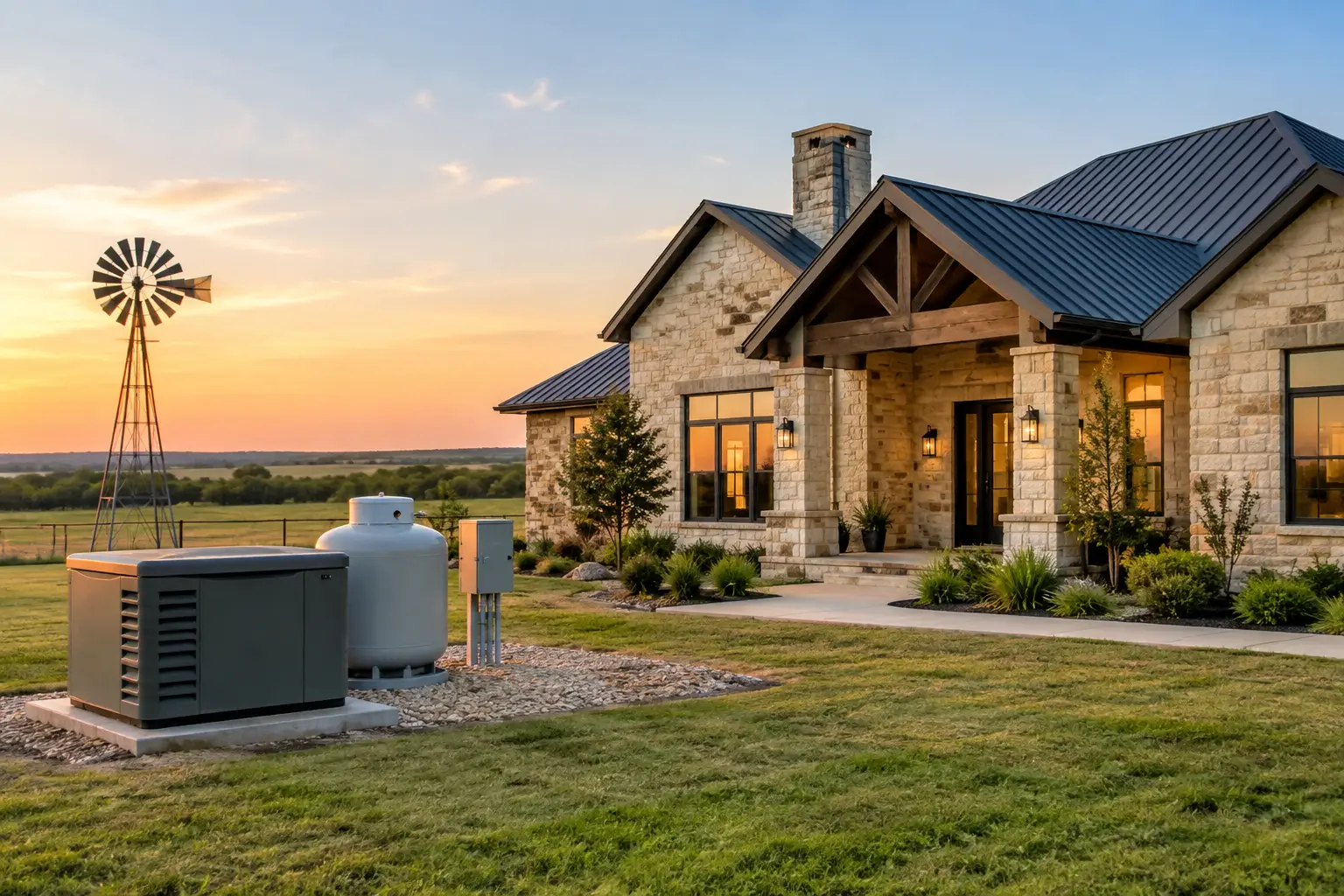
Natural gas may be available near some rural properties, but many homeowners choose propane for cooking, fireplaces, water heating, pool equipment, or standby generators. Propane tank size and placement should be coordinated with the site plan, driveway access, and local clearance requirements. You want a delivery truck to reach the tank without crossing sensitive landscaping or creating an awkward turn near the home.
A backup generator is not essential for every property, but it is worth considering where outages are more common or where a well pump depends on electricity. A standby generator can keep water, refrigeration, critical lighting, and selected HVAC equipment operating during an outage. The right size depends on whether you want to protect a few essentials or run most of the home as usual.
Utilities Should Shape the Home Plan, Not Limit It
Good utility planning is not about letting pipes, wires, and tanks take over your vision. It is about putting them in the right places so they support it. The location of a mudroom can affect plumbing efficiency. A utility room may need space for well equipment or water treatment. A covered porch, outdoor kitchen, or future pool should be considered alongside power, gas, water, and septic needs.
This is where a personal design-and-build process matters. Mill Creek Custom Homes begins with your property, your priorities, and straight answers about what the land requires. Mitchell Spiers helps homeowners connect those early site decisions to a home plan that feels intentional rather than patched together later.
Before you fall in love with a homesite, ask what it will take to bring water, wastewater, electricity, connectivity, and fuel to that exact location. The right answers give your home more than a strong foundation – they give your daily life the comfort and confidence rural living should provide.